
Introduction
Digital Transformation Trends are changing how businesses work, grow, and compete in today’s fast-moving world. From small startups to global companies, everyone is adapting to new digital ways of working. Technology is no longer just a support tool. Instead, it has become a core part of business strategy and daily operations.
In simple terms, digital transformation means using digital tools and technologies to improve processes, customer experiences, and overall performance. However, digital transformation trends go beyond just using software or apps. They focus on mindset changes, smarter decision-making, and long-term growth.
Over the past few years, businesses have realized that staying traditional is risky. Customers now expect fast service, personalized experiences, and online access at all times. Because of this, digital transformation trends are helping companies become more flexible, data-driven, and customer-focused.
What is Digital Transformation Trends?
Digital transformation trends refer to the ongoing changes in how businesses use digital technologies to improve their operations, services, and customer experiences. These trends show the direction in which digital transformation is evolving across industries.
At its core, digital transformation is about integrating technology into every part of a business. This includes communication, marketing, sales, operations, and customer support. Digital transformation trends highlight which technologies, strategies, and approaches are becoming most important.
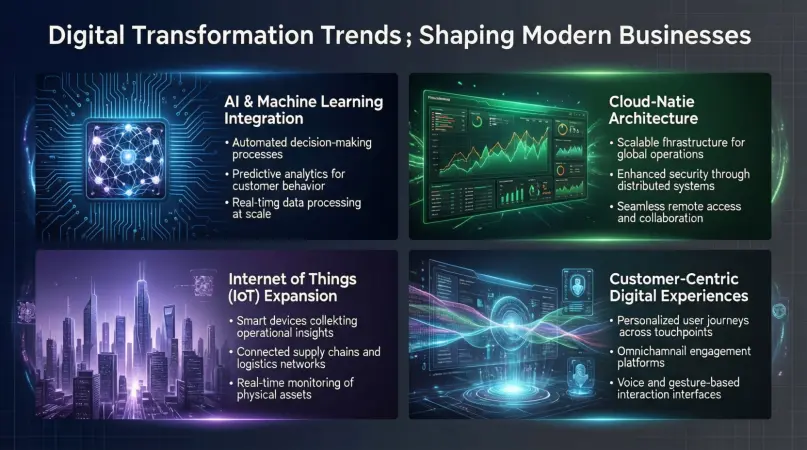
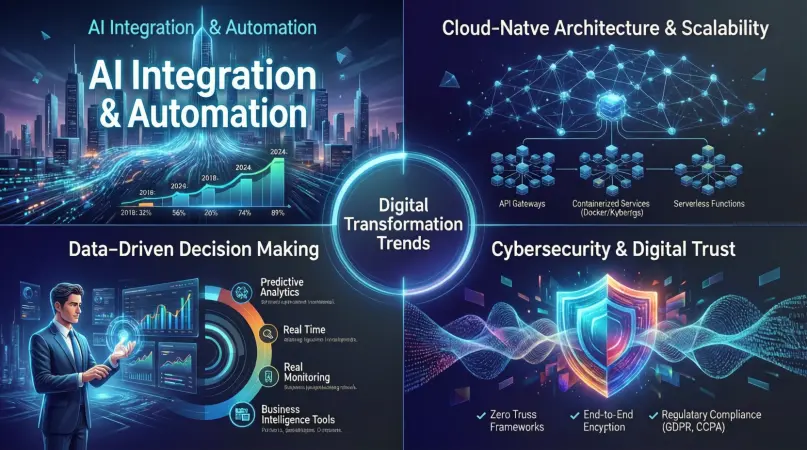
For example, cloud computing, data analytics, automation, and remote work tools are all part of modern digital transformation trends. These tools help businesses work faster and smarter.
It is important to understand that digital transformation trends are not one-time projects. They are ongoing processes. As technology continues to evolve, businesses must keep adapting to new digital possibilities.
Another key aspect of digital transformation trends is cultural change. Companies must encourage learning, innovation, and flexibility among employees. Without the right mindset, even the best technology will not deliver results.
In short, digital transformation trends guide businesses on how to use digital tools effectively while staying focused on people, processes, and long-term goals.
Why is Digital Transformation Trends Important?
Digital transformation trends are important because they help businesses survive and grow in a digital-first world. Customer behavior, market demands, and competition are all changing rapidly.
First, customers expect digital convenience. They want online services, quick responses, and smooth experiences. Digital transformation trends help businesses meet these expectations efficiently.
Second, these trends improve productivity. Automation and digital tools reduce manual work, save time, and lower costs. This allows employees to focus on higher-value tasks.
Third, digital transformation trends support better decision-making. With real-time data and analytics, businesses can understand performance, customer behavior, and market trends more clearly.
Another important reason is flexibility. Digital transformation trends allow businesses to adapt quickly during uncertain times. Remote work, cloud systems, and online platforms help companies stay operational during disruptions.
Finally, digital transformation trends encourage innovation. Businesses can test new ideas, launch digital products, and explore new revenue streams. This creates long-term growth opportunities.
Without following digital transformation trends, companies risk falling behind competitors who are more agile, efficient, and customer-focused.
Detailed Step-by-Step Guide
Step 1: Understand Business Goals
Before adopting digital transformation trends, businesses must clearly define their goals. Technology should support business objectives, not replace them.
Start by asking simple questions. What problems need solving? What processes are slow or costly? What do customers expect?
Once goals are clear, it becomes easier to choose the right digital tools. This step prevents wasted investment and confusion later.
Step 2: Analyze Current Processes
Next, review existing workflows and systems. Identify areas where manual work, delays, or errors are common.
Mapping current processes helps businesses understand where digital transformation trends can make the biggest impact. It also highlights gaps in skills or technology.
This step creates a clear starting point for improvement.
Step 3: Choose the Right Technologies
Not all technologies are suitable for every business. Digital transformation trends offer many options, but selection should be strategic.
Common choices include cloud platforms, customer management systems, data analytics tools, and automation software.
Focus on tools that match business size, budget, and goals. Simplicity and scalability are key factors.
Step 4: Build a Digital Culture
Technology alone cannot drive transformation. Employees must be ready to adopt new ways of working.
Training, open communication, and leadership support are essential. Encourage employees to learn digital skills and share ideas.
A positive digital culture helps reduce resistance to change and improves adoption success.
Step 5: Implement in Phases
Digital transformation trends work best when implemented step by step. Avoid trying to change everything at once.
Start with small projects that deliver quick results. Learn from early experiences and improve future steps.
This phased approach reduces risk and builds confidence across the organization.
Step 6: Measure and Improve
Finally, track progress using clear metrics. Monitor performance, customer feedback, and efficiency improvements.
Digital transformation trends require continuous improvement. Regular reviews ensure that strategies remain effective and relevant.
Benefits of Digital Transformation Trends
- Improved customer experience through faster and personalized services
- Increased operational efficiency and reduced costs
- Better data-driven decision-making
- Greater flexibility and scalability
- Enhanced collaboration and communication
- Stronger competitive advantage
- Support for remote and hybrid work models
- Faster innovation and product development
Disadvantages / Risks
- High initial investment costs
- Resistance to change among employees
- Data security and privacy concerns
- Skill gaps and training requirements
- Integration challenges with legacy systems
- Risk of choosing the wrong technology
Common Mistakes to Avoid
One common mistake is focusing only on technology and ignoring people. Digital transformation trends require cultural change, not just software upgrades.
Another mistake is unclear goals. Without clear objectives, digital efforts become scattered and ineffective.
Some businesses also rush implementation. Moving too fast can lead to errors, low adoption, and wasted resources.
Ignoring data security is another serious issue. Digital transformation trends increase data usage, making protection essential.
Finally, failing to measure results prevents improvement. Regular evaluation is necessary for long-term success.
FAQs
What are digital transformation trends in simple words?
Digital transformation trends are the ways businesses use modern digital tools and strategies to improve how they work and serve customers.
Are digital transformation trends only for large companies?
No, businesses of all sizes can benefit. Small companies often gain flexibility and efficiency by adopting digital transformation trends early.
How long does digital transformation take?
It depends on business size and goals. Digital transformation trends involve ongoing improvement rather than a fixed timeline.
Do digital transformation trends require technical expertise?
Some technical knowledge is helpful, but many tools are user-friendly. Training and support can bridge skill gaps.
Can digital transformation trends reduce costs?
Yes, automation and efficient systems often lower operational costs over time.
What is the biggest challenge in digital transformation trends?
Managing change is often the biggest challenge. Employee resistance and cultural shifts require careful handling.
Expert Tips & Bonus Points
Start with customer needs when exploring digital transformation trends. Customer-focused strategies deliver better results.
Keep communication open during change. Transparency builds trust and reduces resistance.
Invest in employee training. Skilled teams maximize the value of digital tools.
Choose scalable solutions that grow with the business.
Review progress regularly and adjust strategies as needed.
Stay informed about emerging digital transformation trends to remain competitive.
Conclusion
Digital transformation trends are no longer optional in today’s business environment. They shape how companies operate, connect with customers, and compete in the market. Businesses that understand and apply these trends gain efficiency, flexibility, and long-term growth opportunities.
Throughout this guide, we explored what digital transformation trends mean, why they matter, and how to implement them step by step. We also discussed benefits, risks, common mistakes, and expert tips to support successful transformation.